
Case Study on Go To Market
From Wholesale to Direct: A Go-To-Market Plan for a Handloom Business
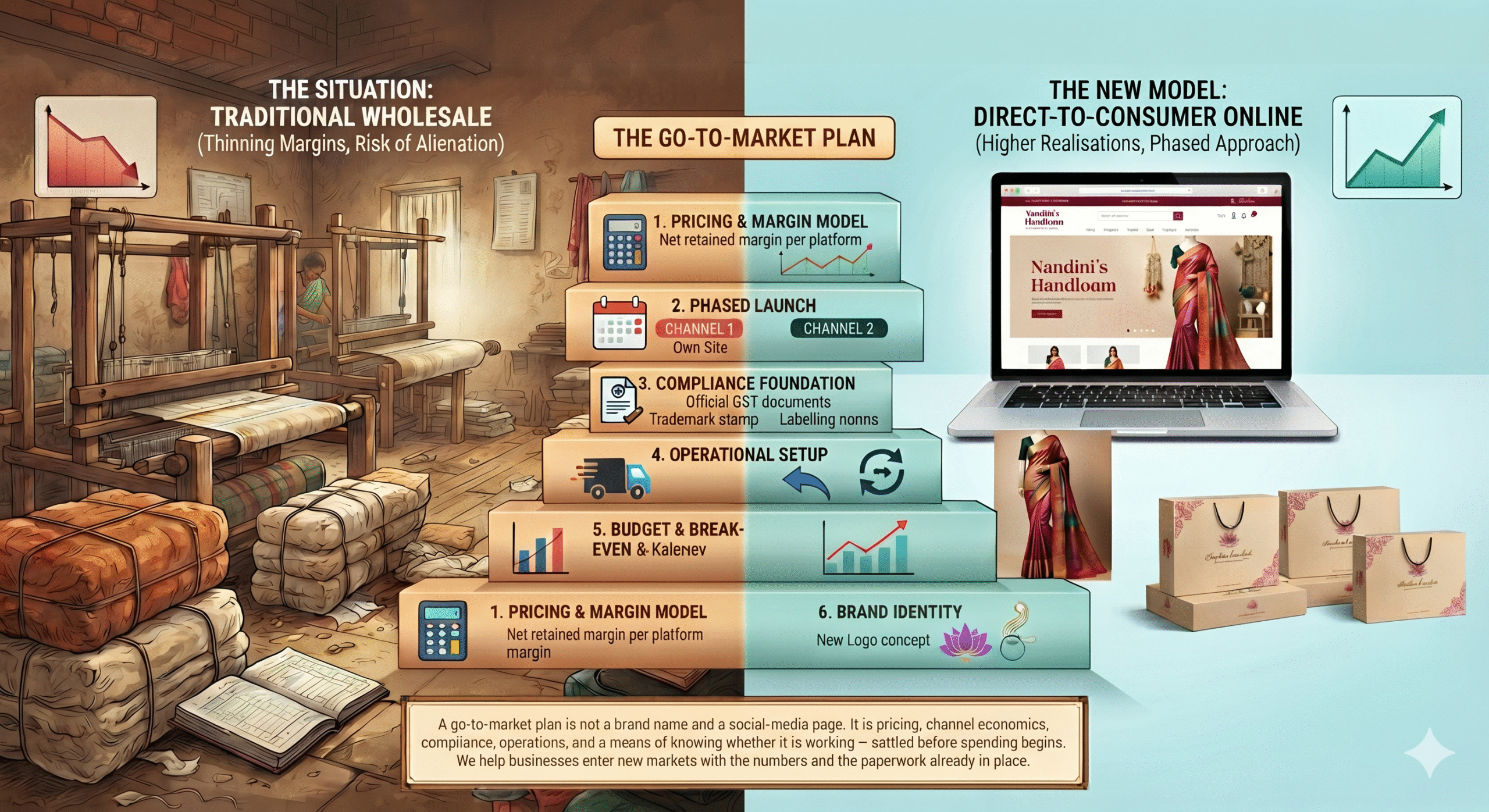
The Situation
Nandini’s family had wholesaled handloom textiles and home furnishings for decades, selling in bulk to retailers and never to end customers. Margins were thinning as retailers pressed on price and as online brands sold comparable products directly at higher realisations. She wanted to launch her own brand online and sell direct. The ambition was sound; the gap was execution — she had no view on pricing, channel choice, or what selling to consumers across India would require of her. Her question: how should she actually go to market?
What we found
What we did
The Result
The Takeaway
A go-to-market plan is not a brand name and a social-media page. It is pricing, channel economics, compliance, operations and a means of knowing whether it is working — settled before spending begins. We help businesses enter new markets with the numbers and the paperwork already in place.
If you are considering a new product, channel or market, the economics are best modelled before launch, not after.
Some names and identifying details in this case study have been changed to protect client confidentiality.
How can we support in Go To Market?
Comprehensive Go To Market solutions handled by experienced Chartered Accountants.
CA-Led Compliance
Entire registration process is prepared and reviewed by qualified Chartered Accountants, ensuring professional-grade accuracy.
Accuracy Guarantee
Our multi-level verification process ensures error-free registration, protecting you from notices and penalties.
Timely Reminders
Proactive deadline tracking and reminders ensure you never miss a due date. On-time, every time.
Dedicated Support
A dedicated compliance manager for all your queries, notices, and year-round TDS support needs.
Get Transparent Pricing for Go To Market
No hidden charges. Clear pricing based on your needs.
Frequently Asked Questions
-
What does “go to market” mean for a business like mine, and why involve a Chartered Accountant?
Going to market is how you launch a new product, channel or geography. The visible part is branding and marketing; the part that decides whether it works is pricing, channel economics, compliance and break-even. That financial and regulatory groundwork is where we add value.
-
We already have a marketing agency. Where do you fit in?
An agency builds demand; we make sure the launch is financially sound and compliant behind it. We set the pricing, model what you actually keep on each channel after fees, put the GST and other compliance in place, and define the budget and break-even — so the agency’s work sells something that makes money.
-
What compliance is involved when we start selling online or across states?
Selling to consumers across India can change your GST position, bring e-commerce TCS into play, and require trademark protection and correct labelling. We map and set up the full compliance stack before you launch, so there are no surprises later.
-
How do you decide pricing for a new product or channel?
We price for the end customer and work backwards, accounting for platform fees, returns, shipping and marketing, so the price reflects what you will actually retain. The same product often needs different pricing on different channels.
-
How much should we budget for a launch, and how will we know if it is working?
We set a launch budget tied to a clear break-even and a defined point at which to scale or stop. That way the decision to invest further rests on results rather than hope.
-
Can you help us avoid damaging our existing business?
Yes. Where a new direct-to-consumer channel risks unsettling existing wholesale or retail buyers, we plan the launch to protect those relationships and keep the core business stable while the new one is funded prudently.
-
How long does it take to get launch-ready?
It depends on the channels and compliance involved, but the groundwork — pricing, the channel model, the compliance setup and the budget — is typically completed before any meaningful spend begins.
-
How are your fees structured?
As a defined-scope fee for the go-to-market work, agreed in advance. Ongoing support during the launch can be arranged on a monthly basis if needed.
Still got some questions?
Speak with a Chartered Accountant and get clarity on Go To Market.